• "Well written, well researched, and the thesis put forth is well argued.... Woods has opened up an area of historical analysis that should invite further study."
    -Journal of American History

  • "During these times that challenge our freedoms there is no one more qualified to make U.S. history relevant to the fight against big government than Thomas Woods."
    -Barry Goldwater Jr.
    Former Member of Congress

  • "I strongly recommend Woods's work."
    -The Honorable Ron Paul,
    U.S. House of Representatives

  • "Written with great clarity and fluency, making the complex philosophical and theological concepts approachable."
    -Journal of American Studies

  • "A must-read."
    -Barron's

  • "An excellent reading source for anyone interested in financial markets, and much more so for anyone interested in learning about capitalism without all the misinterpretations being thrown about in the financial media."
    -Asia Times

  • "Provocative, well-written, and deserves to be read."
    -Catholic Historical Review

  • "An engaging and important contribution to scholarship on the history of American Catholicism."
    -Journal of the Historical Society

  • "Woods and [co-author Kevin] Gutzman appeal to both left and right in this constitutionalist jeremiad…. The authors' exegeses of the Constitution and court decisions, heavy on original intent arguments, are lucid and telling."
    -Publishers Weekly

  • "A marvelous read. Every chapter taught me something new and unexpected."
    -Tom Bethell, senior editor,
    The American Spectator

  • "The hottest book today is Meltdown, by my friend Tom Woods."
    -Judge Andrew Napolitano, senior judicial analyst,
    FOX News Channel

  • "Should be required reading."
    -Economic Affairs (London)

  • "Woods, one of the best classical liberal [libertarian] scholars of his generation, has once more placed us in his debt with this lucid and tightly argued book."
    -David Gordon, The Mises Review

  • "Tom Woods is one of my dearest allies in the struggle against wrong-headed and dangerous economic policy."
    -Peter Schiff

Why Not World Government?

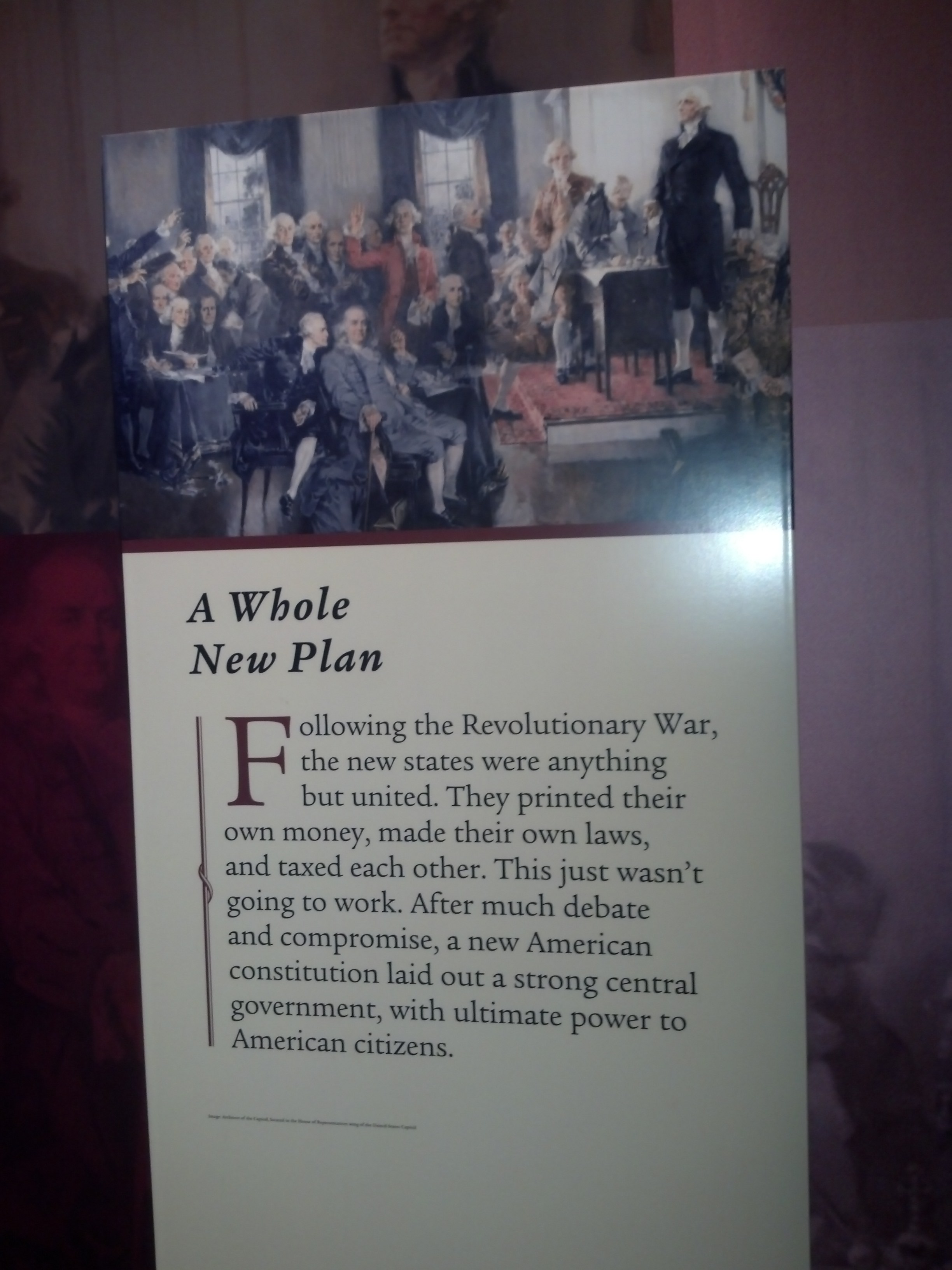
A reader submits this photo taken at the Henry Ford Museum. It’s the usual story: more centralization was needed in 1787. But look at the argument they make: the states were levying tariffs on each other, making their own laws, and creating their own money, so a single political unit had to be placed over them. Wouldn’t the author of this statement be forced, by the same reasoning, to combine all the countries of the world today into a single government?
Unlearn the Propaganda!

  • Jim

    That happens to be a place I go to quite frequently, although I don’t always go to that exhibit. It’s nice to know that someone else who goes to that museum shares my views. I wonder if they’ve noticed how Lincoln-centric the place is. If you ever go, just stick with the exhibits on cars, trains, agriculture, engines, or whatever temporary exhibit is there.

  • Richard

    When the author wrote that this new government would have ultimate power, was that a good thing or a bad thing in his or her mind?

  • Matt

    no, because there isn’t a world government. if there were a world government, then obviously, it would be necessary for our survival, and without it, we would all live in caves.

  • Luke Sunderland

    Good God Tom! Don’t give any ideas!

  • Luke Sunderland

    I meant – “Don’t give them any ideas!

  • http://twitter.com/EdShrugged Ed ODonnell

    Don’t give them any ideas!

  • At Odds

    Wouldn’t they want one world government to reduce or rid redemption on debt and commodities? Therefore, eliminating the argument (in their minds) for commodity monies. Not logical but would be inline with the rest of their arguments.

  • http://www.facebook.com/oakshield Diego Augusto

    “this just wasn’t going to work”, gotta love these kinds of sentences =/