Tom Woods

  • "Well written, well researched, and the thesis put forth is well argued.... Woods has opened up an area of historical analysis that should invite further study."
    -Journal of American History

  • "During these times that challenge our freedoms there is no one more qualified to make U.S. history relevant to the fight against big government than Thomas Woods."
    -Barry Goldwater Jr.
    Former Member of Congress

  • "I strongly recommend Woods's work."
    -The Honorable Ron Paul,
    U.S. House of Representatives

  • "Written with great clarity and fluency, making the complex philosophical and theological concepts approachable."
    -Journal of American Studies

  • "A must-read."
    -Barron's

  • "An excellent reading source for anyone interested in financial markets, and much more so for anyone interested in learning about capitalism without all the misinterpretations being thrown about in the financial media."
    -Asia Times

  • "Provocative, well-written, and deserves to be read."
    -Catholic Historical Review

  • "An engaging and important contribution to scholarship on the history of American Catholicism."
    -Journal of the Historical Society

  • "Woods and [co-author Kevin] Gutzman appeal to both left and right in this constitutionalist jeremiad…. The authors' exegeses of the Constitution and court decisions, heavy on original intent arguments, are lucid and telling."
    -Publishers Weekly

  • "A marvelous read. Every chapter taught me something new and unexpected."
    -Tom Bethell, senior editor,
    The American Spectator

  • "The hottest book today is Meltdown, by my friend Tom Woods."
    -Judge Andrew Napolitano, senior judicial analyst,
    FOX News Channel

  • "Should be required reading."
    -Economic Affairs (London)

  • "Woods, one of the best classical liberal [libertarian] scholars of his generation, has once more placed us in his debt with this lucid and tightly argued book."
    -David Gordon, The Mises Review

  • "Tom Woods is one of my dearest allies in the struggle against wrong-headed and dangerous economic policy."
    -Peter Schiff

‘Bush’s 4th Term’

by Glenn Thrush

The outrage over President Barack Obama’s authorization of a nearly limitless  federal dive into Americans’ phone records obscures a hiding-in-plain-sight  truth about the 44th president many of his supporters have overlooked for  years:

For all his campaign-trail talk of running the “most transparent administration” in U.S history, Obama never promised to reverse the 43rd  president’s policies on domestic anti-terrorism surveillance — and he’s been  good on his word.

Read the whole thing. (Thanks to Felix Bronstein.)

You Can Be a Leftist Without Being a Commissar

You’d think people on the Left would support the idea of state nullification, people tell me, because, after all, they support civil liberties, an easing of the drug laws, food and drink freedom, etc. You’d think so, but a casual glance at left-wing thought-control sites like ThinkProgress and Media Matters will throw cold water on that one pretty quickly. Nationalism and uniformity trump everything else. I mean, what are you, a “neo-Confederate”?

Once in a while you do still come across someone on the Left who actually believes, and doesn’t just pay lip service to, old leftist slogans like “question authority” and “small is beautiful.” One such person is Kirkpatrick Sale, who has had a long and prolific writing career that includes, among many other titles, Human Scale (1980).

I don’t agree with Sale on everything, needless to say, but I deeply respect his refusal to be defined or imprisoned by media-imposed categories. Sale and I have met only once, at a Liberty Fund colloquium years ago — at which I was defending nullification, long before I wrote my book on it — and he told me then that he agreed with me completely. A mutual friend recently sent me Sale’s greetings and expression of support for what I’m doing on the nullification front.

Sale just reviewed a book called Most Likely to Secede: What the Vermont Independence Movement Can Teach Us About Reclaiming Community and Creating a Human-Scale Vision for the 21st Century. Now watch how he speaks. He’s a human being trying to figure out how to solve problems, even if that means stepping outside the boundaries of what Hillary Clinton would like us to say. He is not an automaton enforcing approved opinion, pointing and shouting at heretics. (Ian Millhiser, you may learn something here.)

Here’s a bit of what Sale has to say:

I presume to review this book, even though I am a contributor to it, because it is a fine representation of an increasing tendency across this land of resistance to a federal government grown inept, corrupt, overreaching, overlarge, and overintrusive. That tendency may be labeled, for convenience: nullification.

It doesn’t matter that the word does not appear in this volume, for its spirit does. The volume is called Most Likely to Secede, and it grows out of a secession movement in Vermont that has been active, off and on, for a decade now. But I don’t think secession really is in the immediate future. Instead the subtitle comes closest to what this book is all about—state independence. It is a collection of essays from a magazine called Vermont Commons, which started publishing in 2005, and they deal with every aspect of what it takes for a state to assume unto itself all the processes that have been ceded to (or seized by) the federal government over the years: money, business regulation, energy, health, education, democracy, food safety, information, the commons, and social policies such as abortion and marriage….

If the food movement in Vermont—which has done a lot in recent years to promote local farming and marketing—is ever to set up a truly independent and truly local agricultural system it will have to find a way to push back federal regulations and practices: that is, nullification.

Or take education. Another essay here lays out all the ways in which Vermont could have schools that develop independent thinking, regardless of grades and testing, and gives examples of this being done in a few places in the state. But it is hard to expand these models when the state government is obligated, by state and national laws, to have standardized education. “One vital goal of Vermont independence,” writes Ron Miller, a founder of the “holistic education” movement, “is an educational culture that respects and encourages learning on a human scale, that supports caring and loving communities of learning.” But it runs up against “authoritarian educational policy” and federal “No Child Left Behind” and “Race to the Top” requirements. “National educational policy is one more reason why we need to challenge the burgeoning power of the American empire,” he writes. “We ought to decline the Federal government’s inducements to participate in any ‘race to the top’.”

But declining that means more than a polite “no thank you.” It needs a deliberate campaign to nullify federal laws. That takes courage, but that’s what a surprising number of state legislatures are now displaying.

Read the whole thing. (Thanks to Klint.)

Woods Family Arrives in NYC

My wife and I, along with three of our daughters, arrived in NYC last night. The kids are barely getting out of bed at 10:30am today after I exhausted them last night by walking from 57th Street to Times Square and back, plus other NYC sights. Granted, the time change affects all this, but this is still late for them.

(Our house sitters, meanwhile, have the inestimable privilege of spending some time in Topeka.)

Anyway, we’re going to tour my old residence at Columbia University today, and then maybe do the Water Taxi, a neat Brazilian restaurant, and then Phantom of the Opera.

I’ll try to blog a bit. We’re here, of course, for the Woods/Murphy event on Saturday, which I assume all of you have booked flights to attend.

I Have Too Many Copies of Nullification

In what I euphemistically call my inventory center. So I am giving away signed and personalized copies of Nullification to new subscribers of LibertyClassroom.com right now. Want one? Sign up, then drop me a line. (You will be doing my wife a favor, trust me.)

Don’t worry — you don’t have to attend “classes.” You can listen or watch at your own pace, even while driving.

Our next course, “John Maynard Keynes: His System and Its Fallacies,” is coming this summer. Awesomeness.

(The Nullification giveaway can’t be combined with other offers.)

‘The Question Libertarians Just Can’t Answer’

For some reason, the finger-waggers at Salon think they’ve got us stumped with this one: “If your approach is so great, why hasn’t any country in the world ever tried it?”

So this is the unanswerable question? What’s supposed to be so hard about it? Ninety percent of what libertarians write about answers it at least implicitly.

Let’s reword the question slightly, in order to draw out the answer. You’ll note that when stated correctly, the question contains an implicit non sequitur.

(1) “If your approach is so great, why doesn’t local law enforcement want to give up the money, supplies, and authority that come from the drug war?”

(2) “If your approach is so great, why don’t big financial firms prefer to stand or fall on their merits, and prefer bailouts instead?”

(3) “If your approach is so great, why do people prefer to earn a living by means of special privilege instead of by honest production?”

(4) “If your approach is so great, why does the military-industrial complex prefer its revolving-door arrangement and its present strategy of fleecing the taxpayers via its dual strategy of front-loading and political engineering?”

(5) “If your approach is so great, why do businessmen often prefer subsidies and special privileges?”

(6) “If your approach is so great, why do some people prefer to achieve their ends through war instead?”

(7) “If your approach is so great, why does the political class prefer to live off the labor of others, and exercise vast power over everyone else?”

(8) “Special interests win special benefits for themselves because those benefits are concentrated and significant. The costs, dispersed among the general public, are so insignificant to any particular person, that the general public has no vested interest in organizing against it. An extra 25 cents per gallon of orange juice is hardly worth devoting one’s life to opposing, but an extra $100 million per year in profits for the companies involved sure is worth the time to lobby for.

“If your approach is so great, why does this happen?”

(9) “If your approach is so great, why don’t people want to try it out, after having been propagandized against it nonstop for 17 years?” (K-12, then four years of college.)

[NOTE TO NEW YORKERS: Please come to the Woods/Murphy event in Manhattan on Saturday, June 8!]
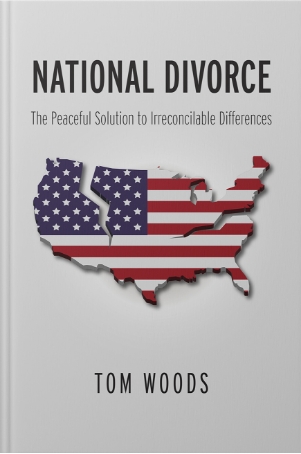
[NOTE TO EVERYONE: Get a free signed copy of my book Nullification when you join my LibertyClassroom.com in June! Drop me a line with your address once you've signed up.]

Drudge Links to Nullification Article; Conservative Talk Radio Still MIA

The Drudge Report links today to an article called “Obamacare Nullification Bill on SC Senate Agenda.”

To my knowledge, Sean Hannity and the rest of the “conservative” talk radio bunch, with a couple honorable exceptions like Mike Church, still have not mentioned nullification. (Mark Levin may have mentioned it, but only to oppose it — unsurprising, coming from a law school graduate.) This has all come to pass in spite of the right-wing’s official gatekeepers. That, to me, is what is so interesting and gratifying about it.

For more on nullification, check out the introduction I’ve prepared, as well as my Frequently Asked Questions.

What’s Going On: A Small Announcement/Appeal

Those of you who visit me at TomWoods.com, as opposed to following me only on social media, etc., are part of my inner circle. So I’m going to fill you in on my situation.

I am fortunate to be able to devote myself to work I thoroughly enjoy, and in which I deeply believe. I try not to take this situation for granted.

Another thing I thoroughly enjoy is fatherhood. I have four children I thoroughly enjoy spending time with, and that time is non-negotiable.

Right now I am engaged in an enormous project, but I think possibly the most important work I have done. I am preparing courses for the Ron Paul homeschool curriculum. At the moment I am working on Western Civilization I, a year-long course. I am breaking my back to make it the very best, most interesting, and most information-packed course I possibly can.

Each course involves 180 video lessons: 36 weeks, five lessons per week. That is an incredible undertaking, even for a relatively efficient person, which I think I am.

This first course needs to be ready to go by mid-August, and by September 2 at the absolute latest. I’ll have a bit more breathing room with future courses, though things will be pretty busy until it’s all finished.

Right now this is consuming most of my time. On top of this, I maintain LibertyClassroom.com (which I consider to be nearly as worthy a project), I do some private-sector consulting, I travel and speak, and I try to blog as much as I can.

But something has to give. I want to keep up this blog, but if I am to do so I will need your help — at least for the next few months. If you happen to come across an interesting link — and it need not always be about Bernanke; it can be unusual and off the wall — or a video worth watching, or whatever, I’d be grateful if you sent it along. (If you would like to be acknowledged, please say so; otherwise I’ll assume you prefer to remain anonymous.) That takes half the work out of blogging, and it would help me across the chasm that stands between me and September 2.

Thank you very much!

From the ‘We’re Out of Ideas’ Dept.

Former Fed economist Joseph Gagnon says: “It’s as if we went to the biggest fire we’ve ever seen and we poured more water on it than we’ve ever poured, and the fire isn’t completely out. Well, we should try more water.”

Substitute “gasoline” for “water,” and you get a little closer to reality.

Can Any Computer People Answer This?

My wife wants to get one of those mini notebook computers for convenience, but they rarely if ever have CD-ROM drives. We want one so we can install Word 2003 (the last version we can stand) on it. Is there any way to solve this problem?

UPDATE: Thanks to everyone for the great advice!

Without President X, Wherever Would We Be?

I talk a lot about the conventional version of history, and the problems with it. I talk about the lack of curiosity on the part of students who simply repeat the conventional version, without bothering to ask simple questions.

Here’s part of my pitch for my 2011 book Rollback, for example:

We know these myths by heart. Government acts on behalf of the public good. It keeps us safe. It protects us against monopolies. It provides indispensable services we could not provide for ourselves. Without it, America would be populated by illiterates, half of us would be dead from quack medicine or exploding consumer products, and the other half would lead a feudal existence under the iron fist of private firms that worked them to the bone for a dollar a week.

Thus Americans tolerate much government predation because they have bought into the myth that state intervention may be an irritant, but the alternative of a free society would be far worse. They have been conditioned to believe that despite whatever occasional corruption they may observe in politics, the government by and large has their well-being at heart. Schoolchildren in particular learn a version of history worthy of Pravda. Governments, they are convinced, abolished child labor, gave people good wages and decent working conditions; protect them from bad food, drugs, airplanes, and consumer products; have cleaned their air and water; and have done countless other things to improve their well-being. They truly cannot imagine how anyone who isn’t a stooge for industry could think differently, or how free people acting in the absence of compulsion and threats of violence – which is what government activity amounts to – might have figured out a way to solve these problems. The history of regulation is, in this fact-free version of events, a tale of righteous crusaders winning victories for the public against grasping and selfish private interests who care nothing for the common good.

Now watch this 2-minute video by some young student. My parody is his reality. In the old days, we didn’t have the minimum wage [gasp!]. We suffered from “monopoly”! (Really? Has he looked at any data?) Then our wise presidents stepped in, etc. Then we got the Great Depression, which had no cause (but was probably caused by capitalism!), and the Depression in turn was cured by World War II.

Here’s how to reply to much of this:

On “monopoly,” I recommend my article “The Misplaced Fear of ‘Monopoly.’

On working conditions and the free market, the best analysis is George Reisman’s.

On the Great Depression, which did have a cause after all, see Murray N. Rothbard, America’s Great Depression, or, more briefly, the relevant section of my book 33 Questions About American History You’re Not Supposed to Ask. For the basic gist, see this overview of the Austrian theory of the business cycle.

On antitrust (the video cheers the Clayton Antitrust Act), see Dominick Armentano, Antitrust: The Case for Repeal, and Thomas DiLorenzo, “The Antitrust Economists’ Paradox.”

Finally, World War II did not end the Great Depression. This is not difficult to prove:

I say all this not to make fun of the guy who made the video. I’m writing this for two reasons: (1) to show how easy it is to fall into the “government is the indispensable source of our happy lives” fallacy, since to understand the full picture requires much more knowledge and thought; and (2) to help people equip themselves to answer these common claims.

Page 3 of 18912345...102030...Last »

Find me on Google